
Tankless Water Heater Installation in San Jose, CA
Efficient Water Heaters, Inc. installs gas tankless water heaters in San Jose, CA, from tank-to-tankless conversions to tankless swaps. We size the gas line, vent and condensate drain first, pull the San Jose permit, and add isolation valves so yearly descaling on hard San Jose Water stays simple.
Call (669) 337-9311 · Get a tankless install quote
Owner experience since 1997 · Licensed since 2015 (CSLB #1008381) · Bonded & Insured · Open 24/7 · Navien Service Specialist
Comparing tankless with a heat pump? The rebate estimator shows which option has an open 2026 rebate in your city.

Get a tankless water heater install quote
Send the install quote form with your current heater type, its rough age and size, and pick Tankless as the system you want. Add photos of the gas meter, the gas pipe where it reaches the heater, the vent on top and the wall where a new unit could hang. From those, Joseph Castro's team can usually tell you whether your house in Willow Glen, Berryessa or Silver Creek needs a gas upgrade before anyone visits.
Prefer a call? Dial (669) 337-9311. The line is answered 24/7, and the install crew works out of our shop on Bayview Ave in East San Jose.
Is tankless worth it in a San Jose home?
Tankless pays off for households that run showers back to back, want the space a 50-gallon tank takes up, and plan to stay long enough to benefit from a longer service life. The Department of Energy's Energy Saver Guide says gas on-demand heaters can be 24% to 34% more efficient than a standard tank in homes using 41 gallons of hot water a day or less, and 8% to 14% more efficient in homes using about 86 gallons a day. It also notes that homes drawing hot water at several fixtures at once may need two or more tankless units (DOE Energy Saver Guide).
Tankless is a weaker fit when the gas meter is small and cannot be upgraded, when there is no legal path for the vent, or when nobody wants to descale the unit each year. In those homes we often quote a high-efficiency tank or a heat pump instead.
| Question | Points to tankless | Points to a tank or heat pump |
|---|---|---|
| How is hot water used? | Two or more showers or a tub filling at the same time | One bathroom and light use |
| Can the gas supply grow? | Meter and pipe can be upsized to the unit's BTU input | Meter or pipe cannot be upgraded |
| Is there a vent path? | Exterior wall or a roof run that clears windows and the property line | Interior closet with no code-compliant vent route |
| Will someone descale it? | Yes, once a year through service valves | No, the owner wants a set-and-forget heater |
| What about the 2028 Air District rule? | You need a new heater now and want gas | You want to be all-electric before the next replacement |
Gas line and meter sizing for a tankless install
A whole-house tankless unit burns far more gas at full fire than a tank burner does, which is why gas sizing is the first thing we check. The City of San Jose states that tankless heaters generally need more gas than a storage tank, that existing house piping must be verified for the higher load, that a dedicated line from the meter is typical and that a larger gas meter may be required (City of San Jose water heater requirements).
In practice that means measuring the pipe length from the meter, counting the other gas appliances on the line and comparing the total against the code sizing table. Older homes in Rose Garden and Naglee Park often have 1/2-inch branch lines that cannot feed a tankless unit, while many 1990s Evergreen houses already have room on a 3/4-inch line. When the meter itself is too small, the upgrade is a PG&E request, so we flag it early. The City asks for the Gas Line Sizing Worksheet at inspection, and all new or altered gas piping is pressure tested.
Venting, condensate and where the unit can go
Most tankless heaters push exhaust out under positive pressure, so the vent must be the material the manufacturer lists. The City notes that Type B vent is not acceptable for positive-pressure vents, that most of these vents are stainless steel because the condensate is slightly acidic, and that every tankless vent must end at least 4 feet from a property line. Condensing units also need a condensate drain that ends at an approved spot.
- Exterior wall mount: allowed for units listed for outdoor use; check HOA rules first, and PG&E wants at least 36 inches of horizontal clearance from the gas meter on the same wall
- Garage mount: common in Cambrian and Almaden Valley ranch homes; garage installs typically need openings to the outside for combustion air
- Attic mount: possible with proper access, clearances, a switched light and a nearby outlet, but attic access cannot be through a bedroom or bathroom
- Not allowed: a gas unit in a bedroom, bathroom or a closet opening into one, unless it is a direct-vent model approved for that space
- Over finished space: a watertight pan with a 3/4-inch drain goes under the unit
Condensing vs non-condensing tankless units
Condensing models pull extra heat from the exhaust, run cooler vent gas and usually vent in PVC or polypropylene where the manufacturer allows it, but they need a condensate drain and often a neutralizer. Non-condensing models vent hotter and need stainless or other listed high-temperature vent material, with no condensate line. In San Jose we install more condensing units because the vent run is easier to route through a garage wall. The choice often comes down to where the drain can go.
Hard water and descaling planning
San Jose Water's 2025 report lists hardness in its groundwater sources averaging 16.8 grains per gallon (San Jose Water 2025 report). Mineral scale builds up on a tankless heat exchanger and shows up as flow errors and lukewarm water, so every unit we install gets hot and cold isolation valves with flush ports. A yearly flush with a pump and descaling solution keeps the exchanger clean, and we can add a scale-reduction cartridge on the cold inlet when the home has no softener.
Tankless install checklist we follow
- Confirm hot water demand: bathrooms, simultaneous fixtures and the incoming water temperature.
- Measure the gas line from the meter and size it against the unit's maximum BTU input.
- Plan the vent route and terminal clearances, and the condensate drain on condensing units.
- Pull the San Jose plumbing permit, plus an electrical permit if a new outlet or circuit is needed.
- Remove the old tank, mount the unit and install the dedicated gas line, isolation valves and pressure relief valve.
- Pressure-test the gas piping, fire the unit, check the temperature rise and set the output temperature.
- Meet the City inspector with the manufacturer's instructions and the gas sizing worksheet, then show you how to flush the unit.
San Jose permits for tankless water heater installation
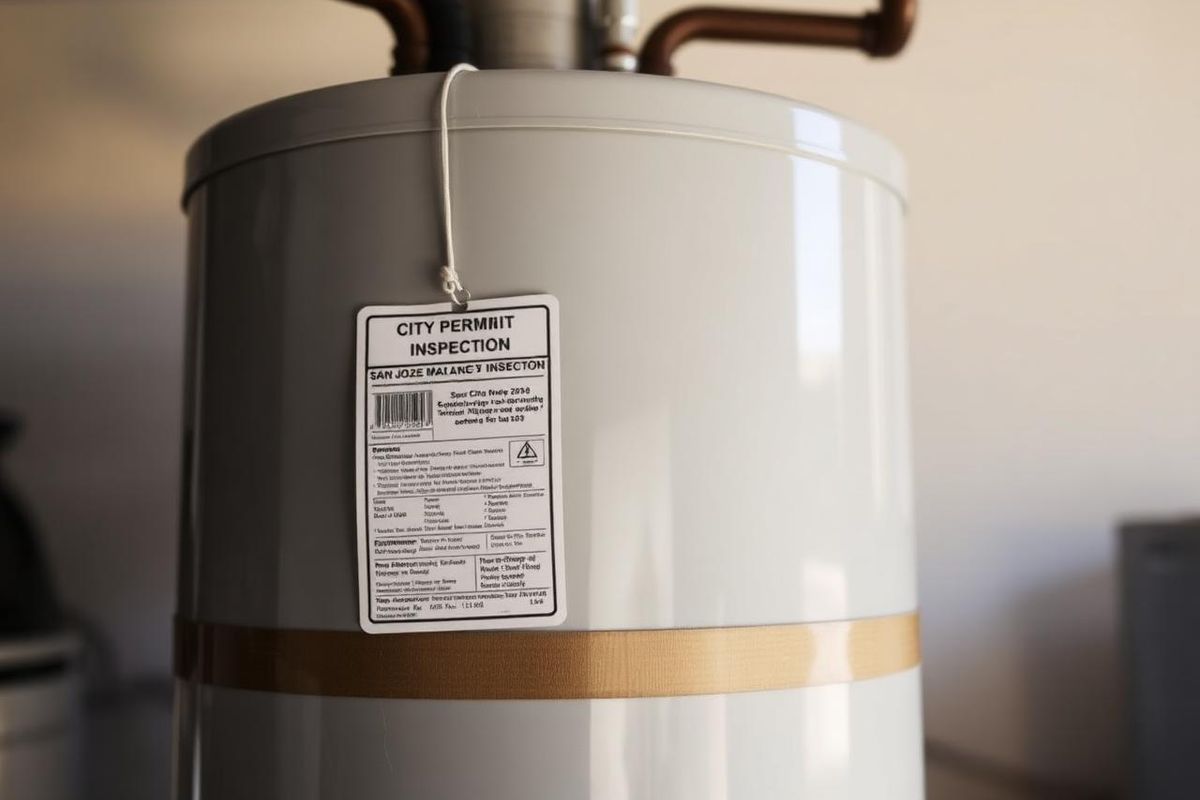
The City of San Jose requires a plumbing permit for every water heater install, and new electrical work, such as an outlet for the tankless controls, needs an electrical permit too. For single-family homes and duplexes the permits are issued online through SJPermits.org, where both can be pulled in one session. Multifamily and commercial buildings that switch a gas tank to a different type of heater need plans through the City's Standard Plan Review (City of San Jose water heater permits). We pull the permit, schedule the inspection and have the paperwork on site. Our San Jose permit guide covers the details.
Signs your tank is ready to be replaced with tankless
- The tank is near or past 10 years old and you would rather plan the switch than replace it in an emergency
- Hot water runs out during the second shower of the morning
- The garage or closet space is needed for storage, an EV charger or laundry
- The tank leaks from the body, rumbles from sediment or gives rusty hot water
- You are remodeling a bathroom or kitchen and the gas line is already being opened up
Unsure whether to repair the current tank? Read our repair or replace guide, or see the tank-to-tankless conversion page for what changes during a switch.
Tankless and the 2028 Bay Area water heater rule
The Bay Area Air District amended Rule 9-6 on November 4, 2026, moving the zero-NOx requirement for residential gas water heaters to January 2028 and applying it only when an existing heater is replaced (Air District announcement). A gas tankless unit installed in San Jose now is allowed. Because a tankless unit can last more than 20 years, it is worth asking whether you want gas or a heat pump for that whole period; our heat pump installation page covers the electric option.
Brands we install and service
We install Navien, Rinnai and Noritz tankless water heaters and carry Navien Service Specialist status, Rinnai PRO and Noritz Certified credentials. We choose the model by gas capacity, the vent route, the flow your household needs and how long you plan to stay. For Navien-specific work see our Navien installer page.
Tankless installation near San Jose
Tankless jobs from our East San Jose shop also cover:
Tankless water heater installation FAQs for San Jose
How long does tankless water heater installation take in San Jose?
A tankless-to-tankless swap is usually done the same day. A tank-to-tankless conversion takes longer because it adds a dedicated gas line, a new vent and often an outlet, and some jobs run into a second day. Inspection is scheduled after the work through the City of San Jose.
How much does a tankless water heater installation cost in San Jose?
The total depends on the unit, how far the gas line has to run, whether the meter needs an upgrade, the vent route and any electrical work. Efficient Water Heaters, Inc. gives a written estimate before work starts; send the install quote form with photos or call (669) 337-9311.
Do I need a bigger gas line for a tankless water heater?
Often, yes. The City of San Jose says tankless heaters generally need more gas than a tank, the house piping must be verified for the higher load, a dedicated line from the meter is typical and a larger meter may be needed. We measure and size the line before quoting.
Can a tankless water heater be installed outside in San Jose?
Yes, if the unit is listed for exterior use. It can go on a side or back wall, subject to HOA rules, and PG&E wants at least 36 inches of horizontal clearance from a gas meter on the same wall. The vent must end at least 4 feet from the property line.
Is a tankless water heater worth it?
It is worth it for homes that use a lot of hot water at once and plan to stay. The Department of Energy says gas on-demand heaters can be 24% to 34% more efficient than a tank for homes using 41 gallons a day or less, and tankless units can last more than 20 years.
How often should a tankless water heater be descaled in San Jose?
Once a year on San Jose Water, whose groundwater sources average 16.8 grains per gallon of hardness. We install isolation valves with flush ports on every unit so the flush is quick, and we can add a scale-reduction cartridge on the cold inlet.
Do I need a permit for a tankless water heater in San Jose?
Yes. A plumbing permit is required, and an electrical permit is needed for any new outlet or wiring. Single-family homes and duplexes get both online at SJPermits.org. Efficient Water Heaters, Inc. pulls the permits and meets the inspector.
Should I choose a condensing or non-condensing tankless unit?
Condensing units are more efficient, vent at lower temperatures and need a condensate drain. Non-condensing units skip the drain but need high-temperature vent material. Where a drain can be routed, we usually install condensing units in San Jose garages.
Will a tankless water heater give me endless hot water?
It keeps heating as long as demand stays within its flow rating. If several showers and appliances run at once beyond that rating, temperature drops. The Department of Energy notes some homes need two or more units, so we size by your peak use.
Is a tankless water heater better than a tank water heater?
Tankless is better for homes with heavy, overlapping hot water use and room to upgrade the gas line; a tank is better for a simple like-for-like swap. Tankless saves space and can last more than 20 years, while a tank costs less to install. We quote both for San Jose homes.
Is it safe to install a tankless water heater yourself?
No, it is not a safe DIY job for most homeowners. A tankless install involves resizing gas piping, pressure testing, a positive-pressure vent and combustion air, where mistakes can cause gas leaks or carbon monoxide. San Jose also requires a permit and inspection, which our licensed crew handles under CSLB #1008381.
Can I still install a gas tankless water heater with the 2028 rule coming?
Yes. The Bay Area Air District's November 4, 2026 amendment starts the zero-NOx standard for residential gas water heaters in January 2028 and applies it only when a heater is replaced. A gas tankless installed today is allowed.
Book your San Jose tankless installation
Call (669) 337-9311 or send the install quote form with photos of your heater, gas meter and vent. See all water heater installation options in San Jose, and check CSLB #1008381 on the state license site.
Call (669) 337-9311 · Get a tankless install quote · Efficient Water Heaters, Inc. on Google Maps